Events
Projects
3MIN
21/8/2026
Accessibility in a healthcare facility begins long before a person enters the doctor’s office.
It is reflected in whether a person can navigate the facility independently, whether they are treated without prejudice, whether they are asked what kind of assistance they need, and whether their personal space is respected.
For the healthcare system in the Sumy region, this issue is particularly relevant. The war has changed the composition and needs of patients: people with disabilities, veterans, internally displaced persons, and patients with traumatic experiences are now seeking care at healthcare facilities. For healthcare workers, this means constantly adapting their approaches to communication and interaction.
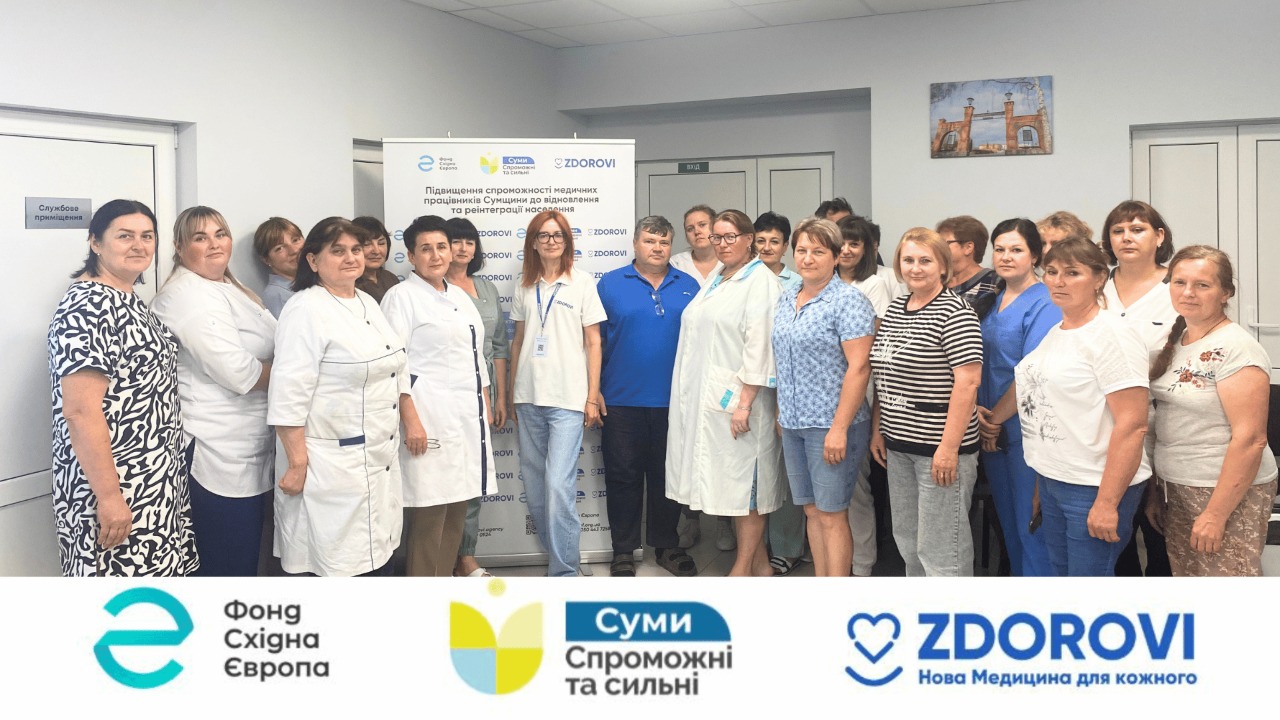
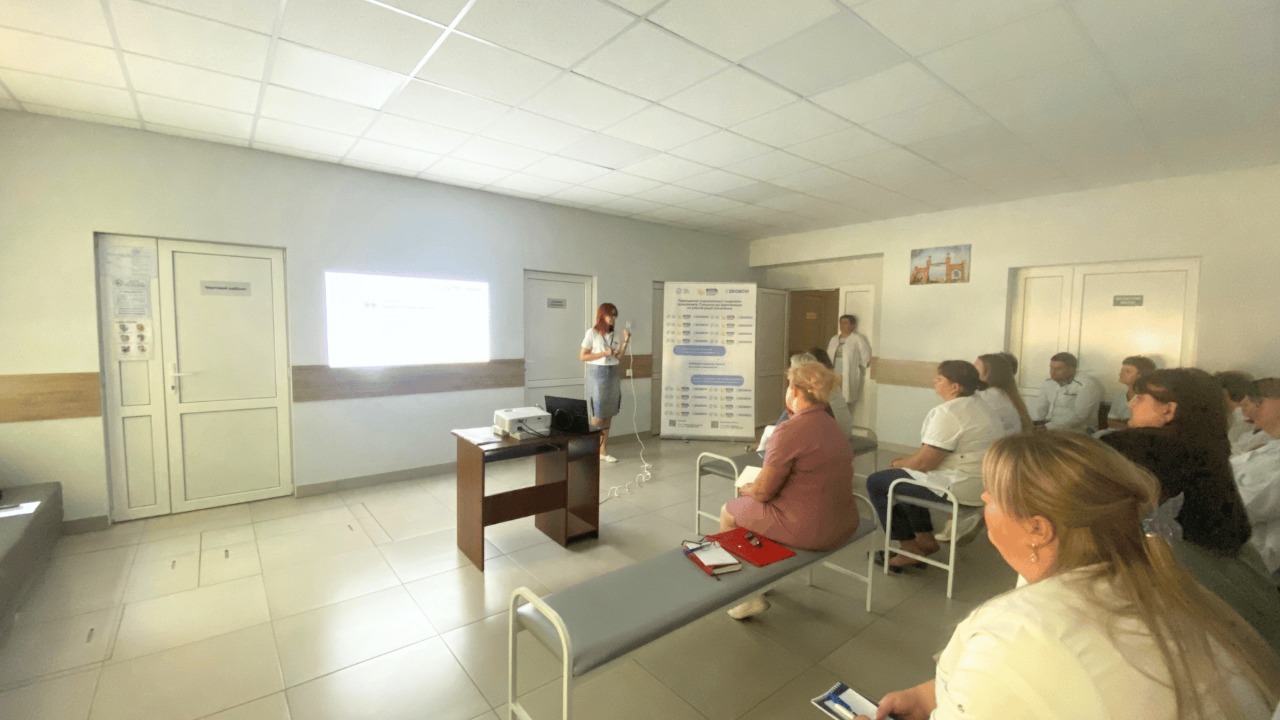
That is why, as part of the project “Strengthening the Capacity of Healthcare Workers in the Sumy Region to Support Recovery and Reintegration of the Population,” the ZDOROVI team conducted a series of accessibility training sessions for staff at nine healthcare facilities in the Sumy region.
The training was held as part of the “Capable and Resistant: Sumy” program, implemented by the East Europe Foundation. Participants did not simply receive new information — they analyzed real-life scenarios, discussed complex cases, and sought solutions that could be applied directly in their medical facilities. As a result of the training, healthcare workers also earned continuing professional development (CPD) credits.
The training sessions placed significant emphasis on communication. After all, even a physically accessible healthcare facility can remain inaccessible if a patient encounters a lack of understanding, condescending behavior, or unwanted assistance.
One of the principles discussed by the participants was “the person comes first.” A disability is just one aspect of a person and should not determine how they are treated.
In practical interactions, this means simple things:
- address the person directly, rather than the person accompanying them;
- ask whether they need help rather than assisting right away;
- do not touch a wheelchair, cane, or other assistive device without permission;
- give the person enough time to respond if they have difficulty speaking;
- use appropriate terminology and avoid phrases that reduce a person to their disability.
These principles may sound obvious. However, healthcare professionals interact with dozens of patients every day, often working under time constraints and high pressure. That is why it is important not only to know these skills but also to practice them regularly.
One of the most debated topics during the training concerned the language we use when talking about people with disabilities and neurodevelopmental conditions. Participants asked the trainers a difficult question: why shouldn’t we call autistic people “rain people” or children with Down syndrome “sunshine kids”? After all, such expressions have been used for years as supposedly warm and friendly terms.
It was at this point that an important discussion emerged about the difference between good intentions and inclusive communication.
During the training sessions, the ZDOROVI team drew on the recommendations of the “Accessibility Handbook,” a guide to respectful communication and inclusive language created at the initiative of Ukraine’s First Lady, Olena Zelenska. The guide emphasizes the importance of using language that does not reduce a person to their diagnosis, condition, or any other characteristic.
Metaphorical terms such as “sunshine kids” or “rain people” may seem positive, but they can create a certain image of a person rather than recognizing them as an individual with their own personality, experiences, and full range of emotions.
“By using such metaphors, we seem to strip a person of the full spectrum of emotions inherent in each of us,” the trainers explained during the session.
This was one of those moments when participants did not simply receive new information but reconsidered familiar words and situations they encounter in their daily work.
At the same time, physical accessibility remains a crucial component of a barrier-free environment. A person should be able to reach a healthcare facility, enter it, navigate the space, and independently or safely access the services they need.
Therefore, accessibility encompasses the patient’s entire journey: from the surrounding area and the entrance to the reception area, doctor’s office, patient rooms, and restrooms.
Key elements include accessible entrances, elevators, clear wayfinding, informational materials, waiting areas, and safe movement throughout the facility.
However, infrastructure alone does not solve the problem of accessibility. If a patient cannot obtain clear information at an accessible entrance, a staff member does not know how to offer assistance appropriately, or communication relies on an accompanying person, a physically accessible space may still present barriers for that individual.
That is why practical application was one of the key elements of the ZDOROVI training sessions.
Participants did not analyze abstract examples but instead worked through situations they might encounter in their daily practice: how to communicate with people with different types of disabilities, how to offer assistance without violating personal boundaries, how to respond when a patient has difficulty expressing themselves, and how to identify barriers that healthcare workers themselves might unintentionally create.
These skills are particularly important for primary care providers, reception staff, emergency department staff, and others who are often the patient’s first point of contact with the healthcare system.
For the Sumy region, this series of training sessions marked another step toward strengthening healthcare teams’ ability to respond to patients’ diverse needs.
The success of such training cannot be measured solely by the number of participants or certificates awarded. What happens after the training ends is far more important. Will a healthcare professional remember a person’s right to decide for themselves what care they need? Will they address the patient directly? Will they notice a phrase that might create an additional barrier? Will they be able to view a familiar situation at work from a different perspective? It is precisely these small changes that contribute to a more accessible healthcare environment.
Accessibility in healthcare is the daily practice of respecting people, their dignity, their choices, and their right to receive care without additional barriers.
And if, after the training, a healthcare worker begins to respond differently to even one situation in their daily work, that is already a concrete change — not on paper, but in their interaction with the patient.
The project “Strengthening the Capacity of Healthcare Workers in the Sumy Region to Support Recovery and Reintegration of the Population” is being implemented by the ZDOROVI Charitable Foundation as part of the “Capable and Resistant: Sumy” project, implemented by East Europe Foundation (EEF).
© 2026 zdorovi. all rights reserved.
контакти
strategy@zdorovi.agency
+380508000924 - контакт-центр фонду
Адреса: 01014, м. Київ, вул. Звіринецька, 63, офіс 1
website by WHYER.AGENCY