Events
2MIN
19/9/2026
The ZDOROVI team took part in the conference “Duty of Care in Ukraine: From Practice to a National Standard,” organized by the Alliance of Ukrainian Civil Society Organizations.
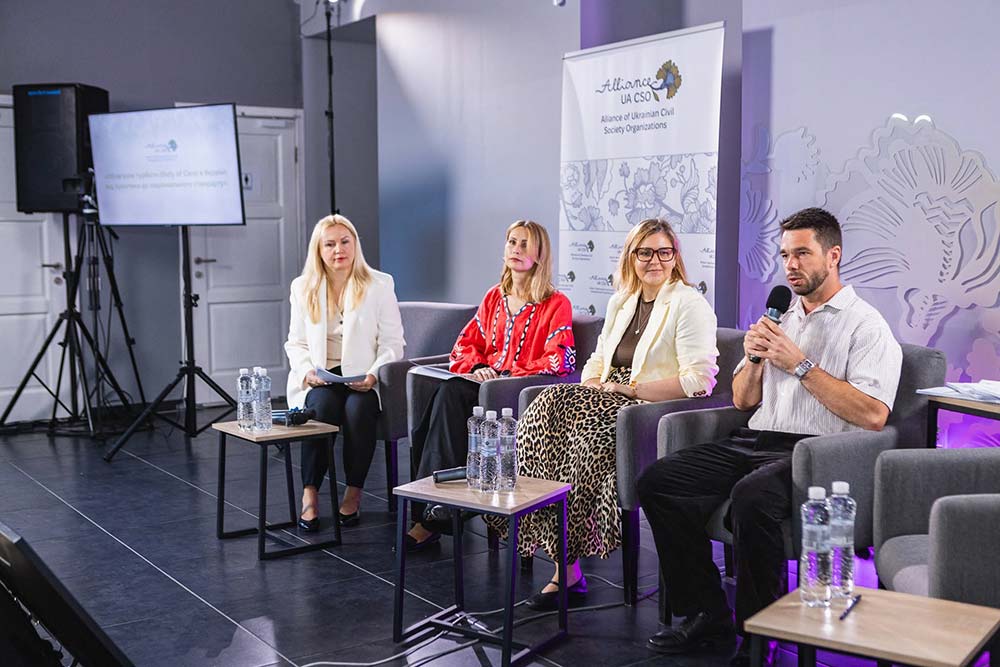
Representatives of Ukrainian and international humanitarian organizations raised a number of pressing issues related to security challenges faced by healthcare and social workers, as well as humanitarian sector professionals.
The speakers highlighted the need for:
- coordinating interagency cooperation on the implementation of technological security measures (electronic warfare systems against enemy FPV drones and other modern technologies that are already being used in practice, but whose integration is not yet fully regulated by law), taking into account legal restrictions;
- developing recommendations for international mechanisms to coordinate the work of organizations in a way that will help avoid shifting risks onto local teams and ensure adequate support for the sector;
- updating safety protocols for humanitarian workers, taking into account the predominant threats posed by FPV drones and new security scenarios in urban settings;
- regulating volunteer activities in frontline regions and improving legislative cooperation with volunteer organizations involved in humanitarian response at the local level;
- developing a communication strategy for international partners and donors that would incorporate the Duty of Care needs of humanitarian sector workers, among other things.
At the event, experts from the Alliance of UA CSO presented a comprehensive Humanitarian Personnel Protection Handbook, developed to provide humanitarian personnel with analytical data and practical recommendations on protecting their rights and ensuring adequate support for sector workers.
The guide also includes practical steps for implementing the “Minimum Duty of Care Package” at all levels of response. In particular, the five basic elements of the Minimum Duty of Care Package, developed by the Swiss Agency for Development and Cooperation, the Humanitarian NGO Platform in Ukraine, and the Alliance of UA CSO, include psychological support, physical safety, practical skills acquired through training, medical support, employees’ right to refuse dangerous assignments and to be evacuated, as well as adequate funding for security measures.
It is precisely the combination of these components that forms the basic institutional framework for protecting humanitarian personnel, which is gradually becoming established as a standard of proper organizational practice.
The participation of representatives of the Ministry of Social Policy of Ukraine, the Committee of the Verkhovna Rada of Ukraine on Social Policy and Protection of Veterans' Rights, the National Qualifications Agency, the Ministry of Foreign Affairs, and the State Labour Service of Ukraine added expertise to the discussion and to the outcomes developed as a result of the dialogue.
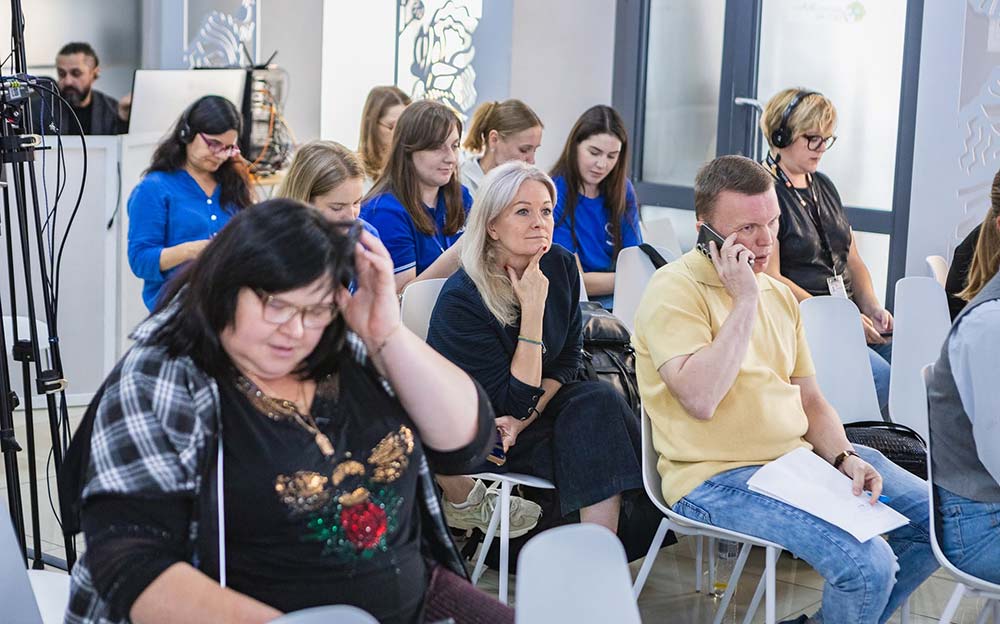
The lively discussion of challenges that have now become the everyday reality for humanitarian workers continued beyond the panels, in informal conversations among the event participants. Organizations exchanged practical cases and experiences in overcoming challenges, compared Ukrainian and international experience, and also discussed the need for the international community to respond proactively, rather than reactively, to the constantly changing situation in Ukraine.
© 2026 zdorovi. all rights reserved.
контакти
strategy@zdorovi.agency
+380508000924 - контакт-центр фонду
Адреса: 01014, м. Київ, вул. Звіринецька, 63, офіс 1
website by WHYER.AGENCY