Events
Projects
3MIN
16/9/2026
What changes when healthcare professionals start talking about accessibility, veterans, and conflicts not as theory, but as part of their everyday work?
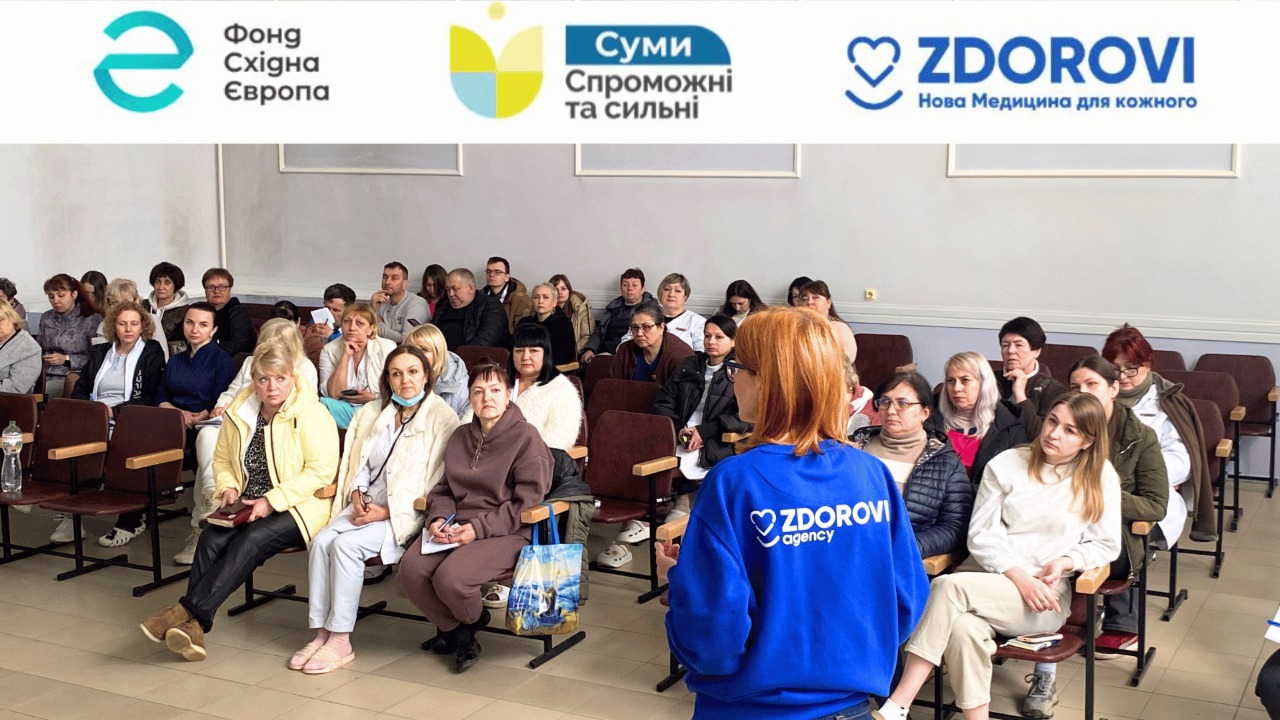
In the Sumy Region, this knowledge is gradually turning into new ways of interacting with patients.
As part of the project “Strengthening the Capacity of Healthcare Workers in the Sumy Region to Support Recovery and Reintegration of the Population,” the ZDOROVI Charitable Foundation team conducted training sessions for healthcare professionals in the region throughout the project.
The project was implemented with the support of the East Europe Foundation as part of the “Capable and Resistant: Sumy” program.
A total of 654 healthcare professionals took part in the training.
Overall, the team conducted 27 training sessions — 18 offline and 9 online — reaching 9 healthcare facilities in 6 communities of Sumy Region. The three areas — accessibility, conflict management, and communication with veterans — were united by one idea: modern healthcare should be not only professionally sound in terms of treatment, but also accessible, safe, and understandable for the person.
Since the beginning of the full-scale war, Ukrainian healthcare has been operating in conditions no university could have prepared its professionals for. Hospitals are increasingly receiving veterans, people with disabilities, internally displaced people, and patients with traumatic experiences. At the same time, medical teams are working under high workloads, limited resources, emotionally challenging circumstances, and the need to quickly adapt to people's changing needs.
In such conditions, professional medical knowledge alone is not enough. Healthcare professionals need to be able to explain complex information to patients, build trust, avoid escalating tensions during conflicts, offer appropriate assistance to a person with a disability, and, when working with a veteran, take their experience into account without reducing the person to that experience alone.
That is why, within the project, ZDOROVI worked not only with theoretical knowledge but also with specific workplace situations. Training participants analyzed cases, asked questions, discussed their own experiences, and looked for solutions that could be applied directly in their facilities.
The training sessions were held at nine healthcare facilities, including:
- The Municipal Non-Profit Enterprise of the Sumy Regional Council, “Sumy Regional Clinical Hospital for War Veterans”;
- Lypova Dolyna Hospital;
- Lypova Dolyna Primary Health Care Centre;
- Municipal Non-Profit Enterprise “Primary Health Care Centre of the Konotop City Territorial Community”;
- Konotop Central District Hospital Named after Academician Mykhailo Davydov;
- Primary Healthcare Centre of Krolevets City Council;
- Romny Central District Hospital;
- Sumy Regional Clinical Specialized Hospital (Romny);
- CNE “Okhtyrka Central District Hospital.”
For the staff of each facility, ZDOROVI trainers conducted training sessions covering three thematic areas.
This means that accessibility, communication with veterans, and conflict management were not treated as one-off informational lectures. Healthcare professionals had the opportunity to return to different aspects of interacting with patients, discuss challenging situations, and practice new approaches.
An accessible healthcare facility today is also a space where people are not forced to overcome additional communication barriers: people speak without prejudice, address the person directly, ask what kind of assistance is needed, respect personal space, and do not make assumptions about their abilities or needs.
During ZDOROVI training sessions, participants analyzed precisely these kinds of situations. For example, if a person uses a wheelchair, this does not automatically mean they need assistance. It is better to ask first. If a patient has difficulty speaking, they should be given enough time to respond rather than having the healthcare professional quickly turn to the person accompanying them. If a person has a disability, their condition should not define the entire communication with them. One of the principles discussed during the training was: “the person first.”
Participants also discussed barrier-free language. One of the questions that prompted discussion concerned familiar metaphorical expressions used to describe people with certain conditions, such as “sunshine children” or “rain people.”
At first glance, such expressions may seem warm and friendly. However, they create a separate image of a person instead of seeing them as an individual with their own character, experience, and full range of emotions.
“By using such metaphors, we seem to take away from a person the full range of emotions that is inherent in every one of us,” ZDOROVI trainers explained during the training.
For healthcare professionals, this has practical significance. Words affect how a person feels when interacting with the healthcare system, whether they feel respected, and whether they are willing to talk about their own needs. At the same time, physical accessibility remains important. Participants analyzed the entire patient journey — from entering the facility and navigating to the reception desk to reaching the doctor’s office, ward, and sanitary facilities.
However, the main conclusion was simple: an accessible space cannot exist separately from accessible communication.
During the training on communication with veterans, participants analyzed real workplace situations: which questions are appropriate during a medical consultation, how to explain procedures, how to respect personal boundaries, and how not to make assumptions about a person’s needs based solely on their status.
One of the key principles is to see a veteran first and foremost as a person, rather than only through the lens of their military experience. If certain information is not needed to provide medical care, there is no need to directly ask a patient about their combat experiences, losses, or the circumstances of their injury. It is equally important to avoid phrases that create the illusion of fully understanding someone else’s experience.
Instead of saying, “I know what you have been through,” it is more appropriate to acknowledge the difficulty of what the person has experienced: “It is difficult for me to imagine what you have been through.” This leaves the person the right to decide for themselves what they are ready to share and when. Participants also practiced communication in situations where a patient reacts emotionally to a consultation or treatment.
Instead of trying to quickly stop an emotional reaction by saying, “calm down” or “everything will be fine,” a healthcare professional can acknowledge the emotion and bring the conversation back to addressing the specific problem:
“I’m listening carefully to you.”
“Let’s try to find the best way to resolve the situation together.”
According to the trainers, these situations raised many questions among healthcare professionals. At each of the nine facilities, participants shared their own experiences of interacting with veterans and worked together to find the most appropriate ways to respond. This made it possible to move from general recommendations to concrete professional practice.
In healthcare settings, conflicts often arise for more than one reason. They may be triggered by long waiting times, insufficiently clear explanations of treatment, complicated processes, a high patient flow, emotional exhaustion, or a feeling that a person has not been heard. In such situations, a patient may perceive a healthcare professional’s actions as indifference, while the healthcare professional may perceive the complaint as a personal attack. That is why, during ZDOROVI training sessions, participants worked not only on how to respond to conflict, but also on how to identify its causes and prevent escalation.
One practical question participants were encouraged to ask themselves was: “Did I explain the situation clearly enough?” Some conflicts arise precisely because of a lack of information. If tension is already increasing, it is important not to respond to aggression with aggression, but to try to change the conditions of the conversation: move to a calmer place, listen carefully to the person, clarify their needs, and jointly determine possible next steps.
Participants also received the training manual “Conflict Management: The Path to Mutual Understanding,” developed by ZDOROVI experts. It explains the principles of partnership between healthcare professionals, patients, and their families through specific situations and practical tools.
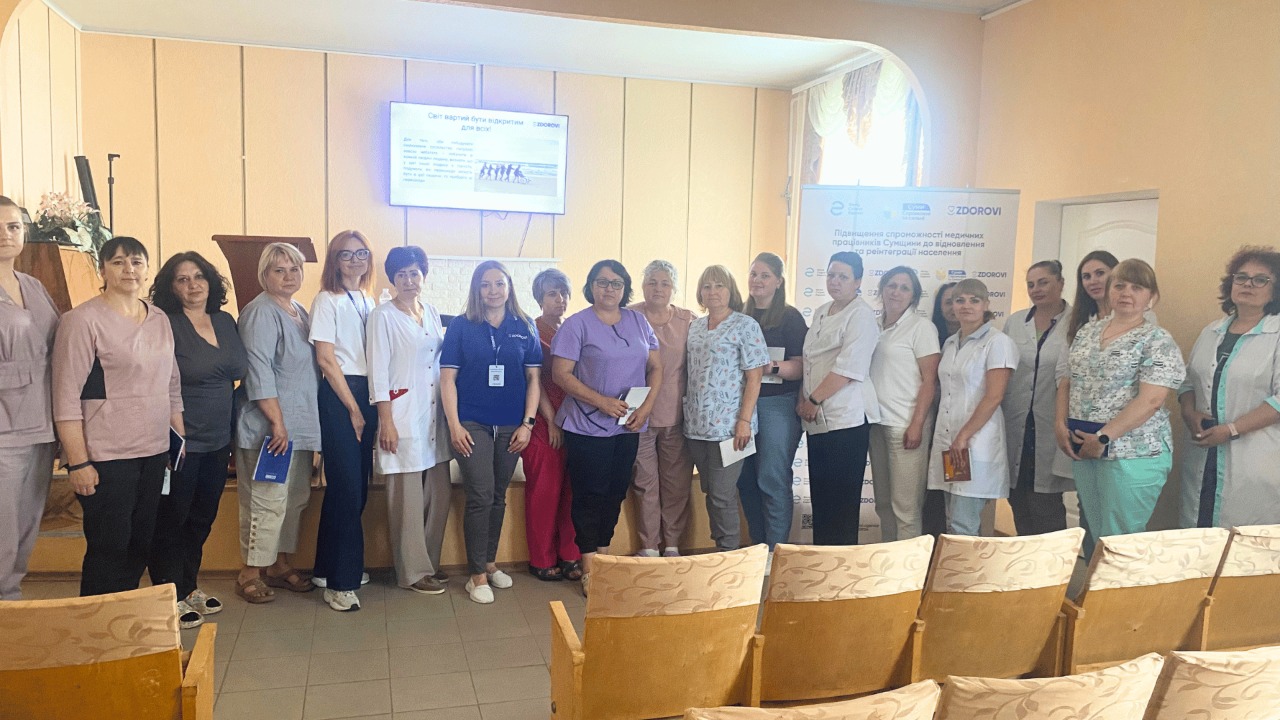
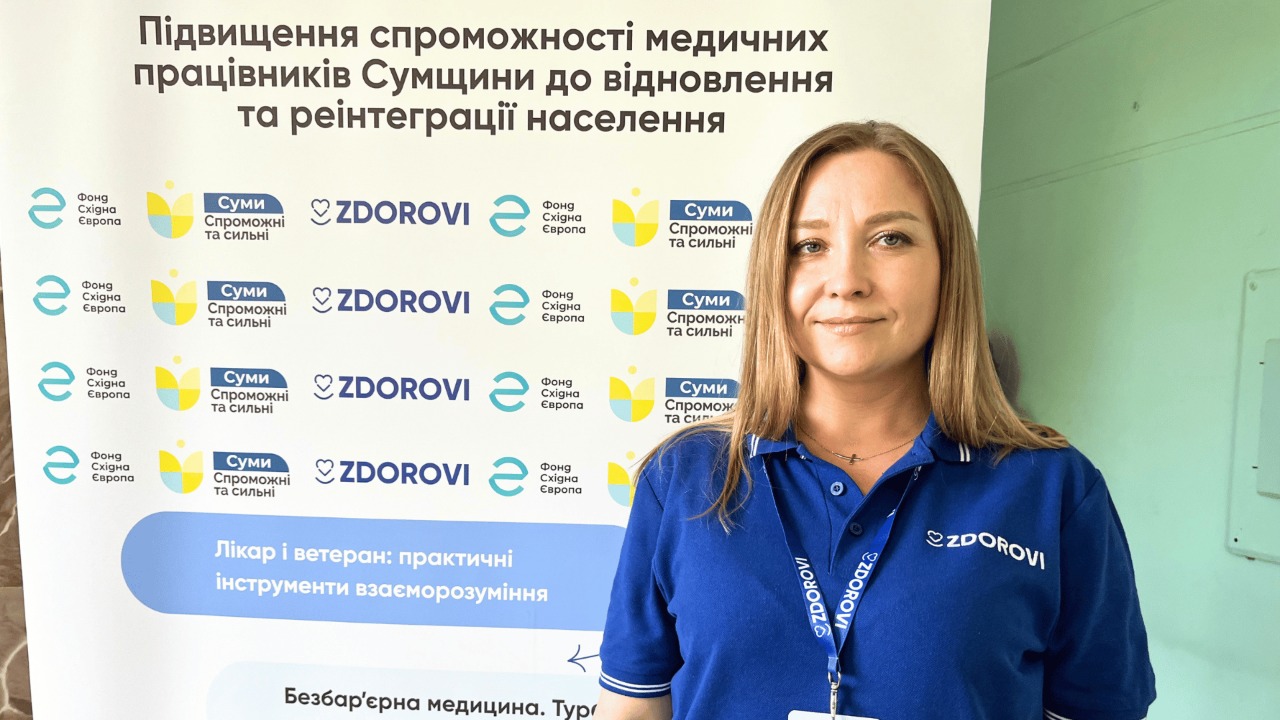
“Conflict management is undoubtedly a useful and always relevant topic for healthcare facilities, because difficult interactions, complaints, and conflicts do no one any good when they are either avoided or allowed to escalate. It is important to learn how to handle them. Training participants identified and took away new tools for influencing situations and recognized the importance of analyzing flawed processes,” said Tetiana Kuzmenko, psychologist and ZDOROVI trainer.
This is an important point: sometimes a conflict reveals not only a communication problem between two people, but also an imperfection in the process itself. If patients regularly complain about the same situation, it is worth asking not only, “How can we respond better?” but also, “What in the organization of work is creating this problem?”
One thing was common to all three areas: participants were not passive listeners. During the training, they worked with their own situations, asked questions, simulated difficult conversations, analyzed wording, and looked for solutions to specific workplace cases.
For a healthcare professional, it is not enough to hear that they need to “be tolerant,” “avoid conflicts,” or “communicate properly with veterans.” It is much more important to understand exactly what to do in a specific situation on a Monday morning, when there is a real patient in front of you, limited time, and a heavy workload.
That is why the training sessions were built around practice. Change can begin with something very simple: asking an additional question, giving a person more time, avoiding assumptions, explaining the next step, acknowledging a patient’s emotion, or reviewing a process that regularly creates tension.
Such decisions may seem small, but they are precisely what shapes the culture of interaction within a healthcare facility.
Developing human capacity was not the only component of the project. To strengthen the capacity of healthcare facilities in the Sumy Region, 9 uninterruptible power supply units were also procured — one for each facility covered by the project.
The total cost of the procurement was UAH 139,500. The uninterruptible power supply units were provided to the facilities to strengthen their capacity to operate in a frontline region and ensure continuity of operations during power outages.
“This project was important because we did not consider accessibility, working with veterans, and conflict management as three separate topics. In the real work of a healthcare professional, they constantly intersect.
For example, a patient may have a disability, a history of military service, a traumatic experience, and be emotionally exhausted from prolonged treatment at the same time. In such a situation, simply knowing the protocol is not enough. It is important to be able to see the person’s needs, communicate appropriately, and avoid creating additional barriers.
That is why, during the training, we worked extensively with practical situations that arise in healthcare facilities every day. It was important to us that participants could not only gain new knowledge, but also ask questions about their own experiences, discuss challenging cases, and find tools they could apply in their work the very next day,” notes Kateryna Malyshеva, ZDOROVI Project Manager.
For ZDOROVI, this project was an opportunity to work directly with healthcare teams in the region and respond to challenges that have already become part of their daily work.
People-centered care is often associated with major systemic solutions. But in practice, it begins with much smaller things: how a healthcare professional addresses a patient, whether they ask before helping, whether they explain a procedure, whether they avoid making assumptions about a veteran based solely on their military experience, and whether they can see behind a conflict not only an emotional reaction but also a problem in the process. It is these everyday actions that gradually shape a new culture of healthcare.
“We can procure modern equipment and provide a facility with the necessary resources, but it is people who determine what healthcare will be like for the patient. How a healthcare professional welcomes a person, whether they explain the next steps, respect their boundaries, and can calmly handle a challenging situation all have a significant impact on the patient’s experience of receiving care.
That is why we invest not only in the material capacity of healthcare facilities, but also in developing their teams — their knowledge, practical skills, and culture of interaction. This is especially important today, when the healthcare system is operating in wartime conditions and encountering new patient needs every day.
Such changes do not end with the training. The knowledge gained remains within the teams and can become part of their daily practice — in communication with patients, conflict management, creating an accessible environment, and building partnerships,” emphasizes Nataliia Tulinova, Foundress and CEO of ZDOROVI.
Over the course of the project, 27 training sessions held at nine facilities became a space for hundreds of healthcare professionals to work together through challenging situations from their practice.
The main test of any training lies ahead: applying the knowledge gained in everyday work.
The project “Strengthening the Capacity of Healthcare Workers in the Sumy Region to Support Recovery and Reintegration of the Population” demonstrated that the resilience of healthcare is not only about equipment or infrastructure. It is also about the people who work in the system every day, their willingness to learn, rethink their approaches, and change their practices.
“For us, the result of this project is not only the number of training sessions conducted or participants involved. What matters is that healthcare professionals had an opportunity to pause and look at familiar workplace situations from a different perspective: Is it really clear to the patient what is happening to them? Can we make their journey through the facility easier? Are we creating a barrier where it could have been avoided? Does our communication help solve the problem, or does it increase tension? People-centered healthcare is shaped by these everyday professional decisions,” concludes Project Manager Kateryna Malyshеva.
The project “Strengthening the Capacity of Healthcare Workers in the Sumy Region to Support Recovery and Reintegration of the Population” is being implemented by the ZDOROVI Charitable Foundation as part of the “Capable and Resistant: Sumy” project, implemented by East Europe Foundation (EEF).
© 2026 zdorovi. all rights reserved.
контакти
strategy@zdorovi.agency
+380508000924 - контакт-центр фонду
Адреса: 01014, м. Київ, вул. Звіринецька, 63, офіс 1
website by WHYER.AGENCY